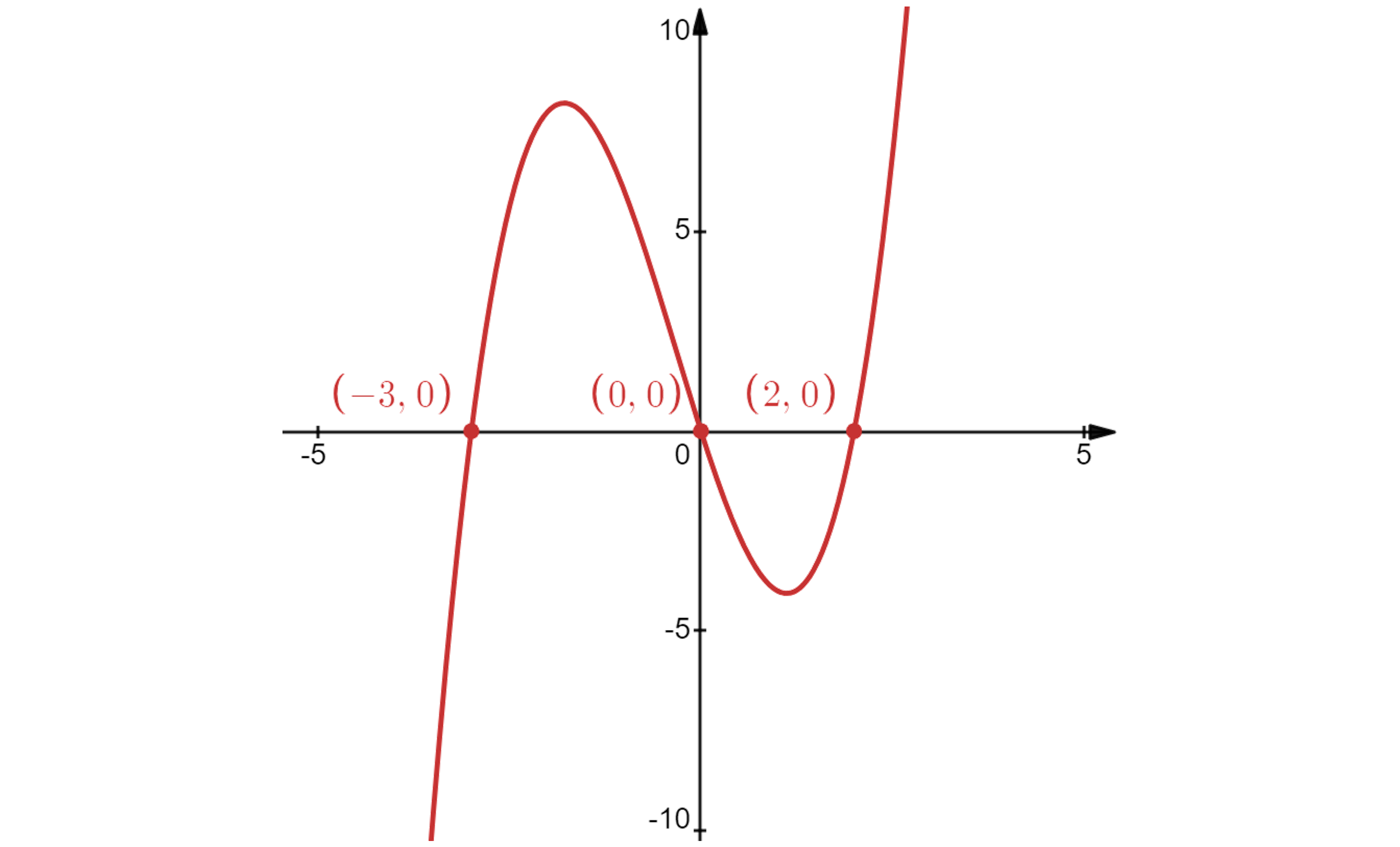

Understanding the concept of an increasing role graph is all-important for anyone delving into the world of mathematics, particularly in calculus and graph theory. An increasing function graph is a optical representation of a map where the output values (y values) increase as the input values (x values) increase. This fundamental concept is not only essential for academic purposes but also has practical applications in respective fields such as economics, engineering, and data skill.
What is an Increasing Function Graph?
An increasing role graph is characterized by a function f (x) where, for any two points x1 and x2 in the domain of the function, if x1 x2, then f (x1) f (x2). In simpler terms, as you locomote from left to right along the x axis, the graph of the function rises or stays the same. This property makes the graph visually identifiable as it systematically moves upwards or remains flat.
Identifying an Increasing Function Graph
Identifying an increasing function graph involves various steps. Here are the key points to consider:
- Check the Slope: For a linear role, the slope (m) of the line should be positive. A confident slope indicates that the role is increasing.
- Analyze the Derivative: For non linear functions, the derivative f (x) should be non negative for all x in the domain. If f (x) 0, the function is increase.
- Visual Inspection: By plotting the function, you can visually inspect whether the graph rises as you locomote from left to right.
Examples of Increasing Function Graphs
Let s look at a few examples to solidify the concept:
Linear Functions
A bare example of an increasing function is a linear purpose of the form f (x) mx b, where m 0. For representative, view the function f (x) 2x 3. The slope m 2 is plus, point that the function is increase.
Quadratic Functions
Quadratic functions can also be increase over certain intervals. Consider the function f (x) x 2. This function is increasing for x 0 because the derivative f (x) 2x is plus for x 0.
Exponential Functions
Exponential functions of the form f (x) a x, where a 1, are always increasing. for case, f (x) 2 x is an increase function because the base 2 is greater than 1.
Applications of Increasing Function Graphs
Increasing function graphs have numerous applications across assorted fields:
Economics
In economics, increasing functions are used to model supply and demand curves. For case, the supply curve, which shows the relationship between the price of a good and the amount ply, is typically an increasing function. As the price increases, the amount supplied also increases.
Engineering
In direct, increasing functions are used to model various physical phenomena. for instance, the relationship between voltage and current in an electric circuit can be pattern using an increasing use. As the voltage increases, the current also increases, following Ohm s law.
Data Science
In datum skill, increase functions are used to model trends and patterns in data. For instance, time series analysis ofttimes involves identify increasing trends in information sets. An increasing purpose graph can help visualize these trends and make predictions about future information points.
Properties of Increasing Function Graphs
Understanding the properties of increase use graphs is all-important for their efficient use. Here are some key properties:
Monotonicity
An increase mapping is a type of monotonic use. Monotonic functions are either entirely non increasing or non diminish. An increase function is non minify, meaning it either stays the same or increases as x increases.
Continuity
Increasing functions are frequently continuous. A continuous mapping is one where small changes in the input result in pocket-sized changes in the output, without any sudden jumps. Most increase functions encounter in hardheaded applications are uninterrupted.
Derivative
The derivative of an increase function is non negative. For a differentiable mapping f (x), if f (x) 0 for all x in the domain, then f (x) is an increasing function.
Constructing an Increasing Function Graph
Constructing an increase role graph involves respective steps. Here is a step by step guide:
Step 1: Define the Function
Start by defining the function f (x) that you want to graph. Ensure that the part is increasing by checking the derivative or the slope.
Step 2: Choose the Domain
Determine the domain of the function, which is the set of all potential input values ( x -values).
Step 3: Plot Key Points
Plot key points on the graph by deputize different values of x into the part and calculating the corresponding y -values.
Step 4: Connect the Points
Connect the plotted points with a smooth curve or line, check that the graph rises or stays the same as you travel from left to right.
Note: For non linear functions, it may be helpful to use a chart reckoner or software to plot the function accurately.
Common Mistakes to Avoid
When act with increasing part graphs, it s significant to avoid mutual mistakes:
- Incorrect Slope: Ensure that the slope of the use is confident for linear functions. A negative slope indicates a decreasing office.
- Misinterpreting the Derivative: For non linear functions, right interpret the derivative to determine if the purpose is increase.
- Incorrect Domain: Choose the correct domain for the function to avoid plotting points outside the valid range.
Comparing Increasing and Decreasing Functions
Understanding the divergence between increase and decreasing functions is essential. Here is a comparison:
| Increasing Function | Decreasing Function |
|---|---|
| Output values increase as input values increase. | Output values decrease as input values increase. |
| Slope is positive for linear functions. | Slope is negative for linear functions. |
| Derivative is non negative. | Derivative is non positive. |
By understanding these differences, you can accurately identify and analyze both types of functions.
Increasing role graphs are a central concept in mathematics with wide rove applications. By see their properties, fabricate them accurately, and avoiding mutual mistakes, you can efficaciously use increase use graphs in various fields. Whether you are a student, engineer, economist, or information scientist, mastering the concept of increase use graphs will raise your analytical skills and problem solving abilities.
Related Terms:
- increasing and decreasing mapping examples
- increasing fall on a graph
- decreasing vs increase office
- increase and lessen function graph
- increase vs decreasing graph
- plus and increase graph